Background Readings of Air Monitoring Stations at Construction
Blog
Air Monitoring at Remediation Sites – What I learned from a visit to Gowanus, NYC

Article Details
Last Updated
09 Dec 2021
Published
sixteen November 2018
What is remediation?
Environmental site remediation deals with the removal of pollution or contaminants from soil, groundwater, sediment, or surface water. It includes systematic steps involving detection, investigation and hazard assessments of suspected contaminated sites. Remedial activities are designed to opposite toxic changes in soil and h2o, eliminate site pollution, and protect sensitive receptors, such as people, environment and ecology. Air quality is an important ecology media which acts every bit an ecological pathway for contaminants to reach receptors. Air monitoring at remediation sites is used to detect and mitigate nuisance grit and toxic contaminants emitted during remedial works including dust particles, aerosols, odors, vapors and heavy metals.
Why is air monitoring required at remediation sites?
Remediation of contaminated land sites and waterways, like Gowanus Canal, can pose a serious chemical exposure run a risk to on-site workers, neighboring communities and the surrounding ecology. The EPA has identified more than a dozen contaminants in the sediment of the culvert. These include polycyclic aromatic hydrocarbons, polychlorinated biphenyls and heavy metals, including mercury, lead and copper. The risk is that toxic air pollutants trapped in the contaminated soils or sediment are released into the air during earth-moving activities, such as digging, transfer, handling, and removal of soil.
What are the cardinal objectives to measuring air quality at remediation sites?
The goal of air quality monitoring is to detect and command off-site fugitive emissions of toxic air contaminants. Perimeter or boundary air monitoring is used to trigger abatement controls to reduce potential exposure to surrounding communities. The details are typically outlined in the Customs Air Monitoring Program (CAMP) but essentially the air monitoring should fulfil these objectives:
-
Protect human being health and the environment from airborne contamination
-
Monitor perimeter air quality during remediation activities
-
Identify the requirement for dust suppression systems
-
Comply with regulatory and recommended guidelines
-
Provide risk management and public confidence
-
Reduce project owner's potential for liability
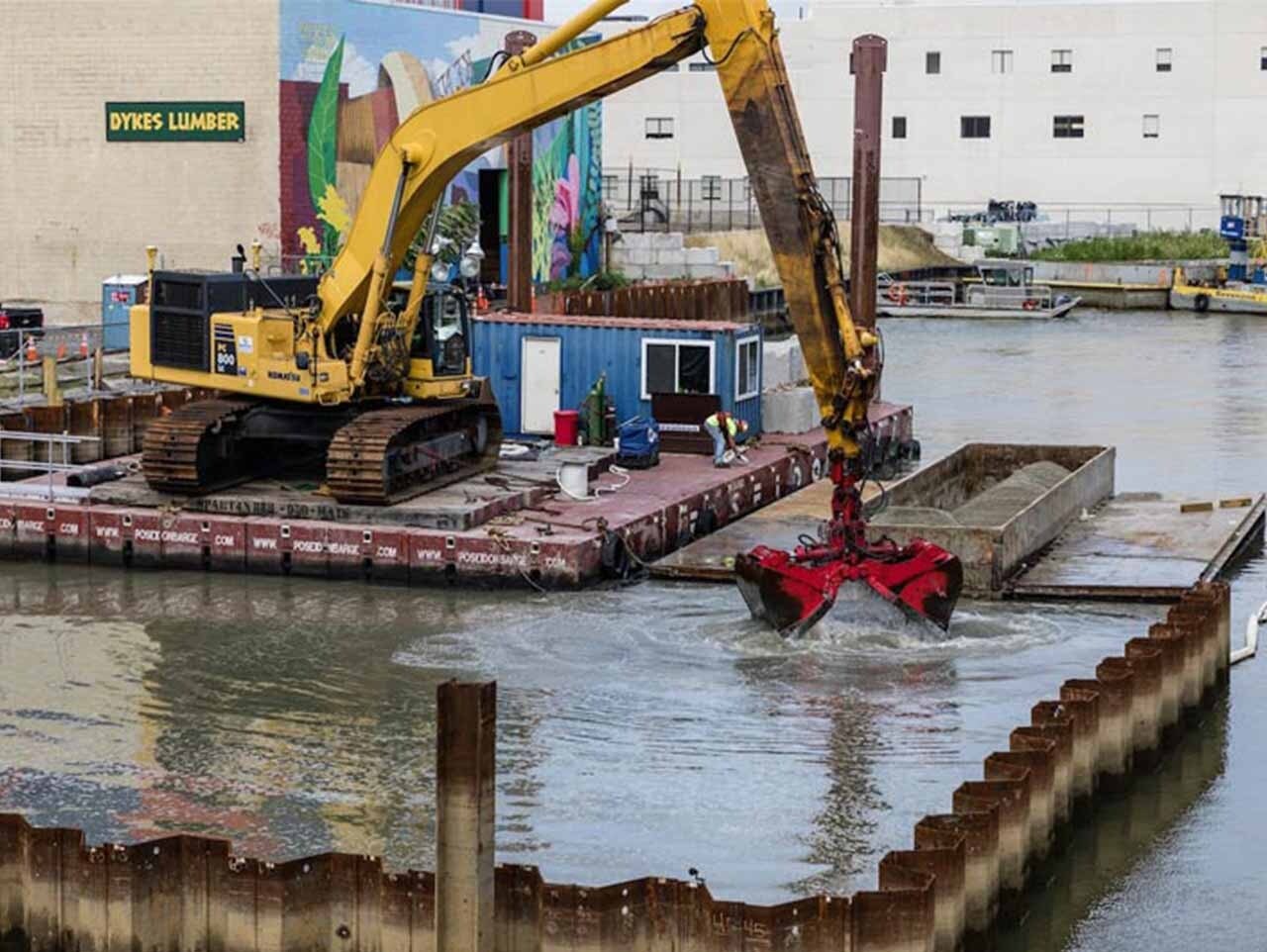
Excavating contaminated sediment at the 4th Street Turning Basin for transfer to the sludge treatment thousand - Gowanus Canal, NYC.
What are the regulations and who makes the rules?
Air monitoring requirements and target parameters are usually determined by site investigative reports and federal, state or county guidelines. Examples of U.South. regulatory guidelines for remediation sites include New York Land DER-x Technical Guidance for Site Investigation and Remediation and Customs Air Monitoring Plan (Camp), and in California the Due south Declension Air Quality Direction District (SCAQMD) Rule 1466 Control of Particulate Emissions from Soils with Toxic Air Contaminants (TACs). In the UK the IAQM has published similar guidance for air quality monitoring in the vicinity of sabotage and structure sites. The Gowanus Superfund project is governed by NYS December DER-10 guidelines.
How do you know which remediation sites require air monitoring?
Information technology will depend on what your local and federal regulations are. However, hither's a list of remediation sites which typically require air monitoring:
-
The states EPA State Superfund National Priority List (NPL) sites
-
Former Manufactured Gas Plant (MGP) sites
-
Inactive Chancy Waste Disposal sites
-
Brownfield Cleanup Programs (BCP)
-
Environmental Restoration Programs (ERP)
-
Mine tailings investigation and rehabilitation
-
State/Regional Water Lath Site Cleanup Programs
-
Old metal smelting and timber treatment facilities
The Gowanus Canal project (see further details below) is an instance of the EPA Superfund National Priorities Listing (NPL).
What should exist defined in the air quality monitoring programme?
Parameter-specific action levels are adamant for each site based on a site label survey, soil information, planned remediation activities, and applicable regulatory guidelines. For case, the Gowanus Canal cleanup has used this information to define the air quality monitoring programme. The following points are typically defined for remediation sites:
-
On-site receptors (i.e. workforce)
-
Off-site receptors (i.e. residences, businesses, schools and full general public)
-
Ecological receptors (i.e. the natural environment)
-
Pollutant parameters to be monitored
-
Emission limits and trigger levels for each pollutant
-
Number and location of monitoring sites relative to air current and perimeter
-
Protocols for frequency of monitoring and reporting
-
Monitoring equipment specification, calibration and approvals
-
Information storage, telemetry and alarm systems
-
Sample collection and procedures if required
-
Baseline monitoring where other emission sources are present
-
Emissions activity plan
What pollutants and parameters are measured?
Remediation site emissions normally incorporate dust/particulates (particulate matter PM10) and Total Volatile Organic Compounds (TVOC). At the Gowanus site both TVOC and PMten grit are monitored in real-time. Sites that are known to be contaminated but with heavy metals may only require particulate PM10 monitoring. Additional monitoring may be required if radiological contamination is a business organization. Meteorological parameters, in particular wind direction and wind speed, are typically monitored at a remediation site. Nuisance parameters such as racket, vibration, and scent might also be monitored on a case past instance basis. Sure waste product sites may call for monitoring specific compounds, such as marsh gas or hydrogen sulfide.
When should air monitoring brainstorm?
A site characterization survey is conducted to establish baseline atmospheric condition earlier a remediation projection commences. This determines exposure pathways which have the potential to impact sensitive receptors located nearby. This commonly involves non-intrusive, brusque-term air monitoring and soil sample collection before starting any activities which could potentially generate emissions. It is advisable to maintain consistency in sampling methodology throughout the catamenia of remedial activities to avoid uncertainties between baseline and subsequent results.
What are defensible methods to mensurate VOCs?
In that location are several methods for periodic sampling of VOCs. One is to install sorbent tubes around the site perimeter, which trap airborne VOCs onto absorbent material over a menses of days or weeks. The sample is then analyzed by a laboratory to determine the average amount of organic vapor nowadays in the air. VOCs can also be nerveless in particularly-prepared SUMMA® canisters, or Tedlar® numberless, for speciated analysis (e.chiliad. BTEX compounds) by Gas Chromatography/Mass Spectrometry (GC/MS) according to EPA Method TO-15.
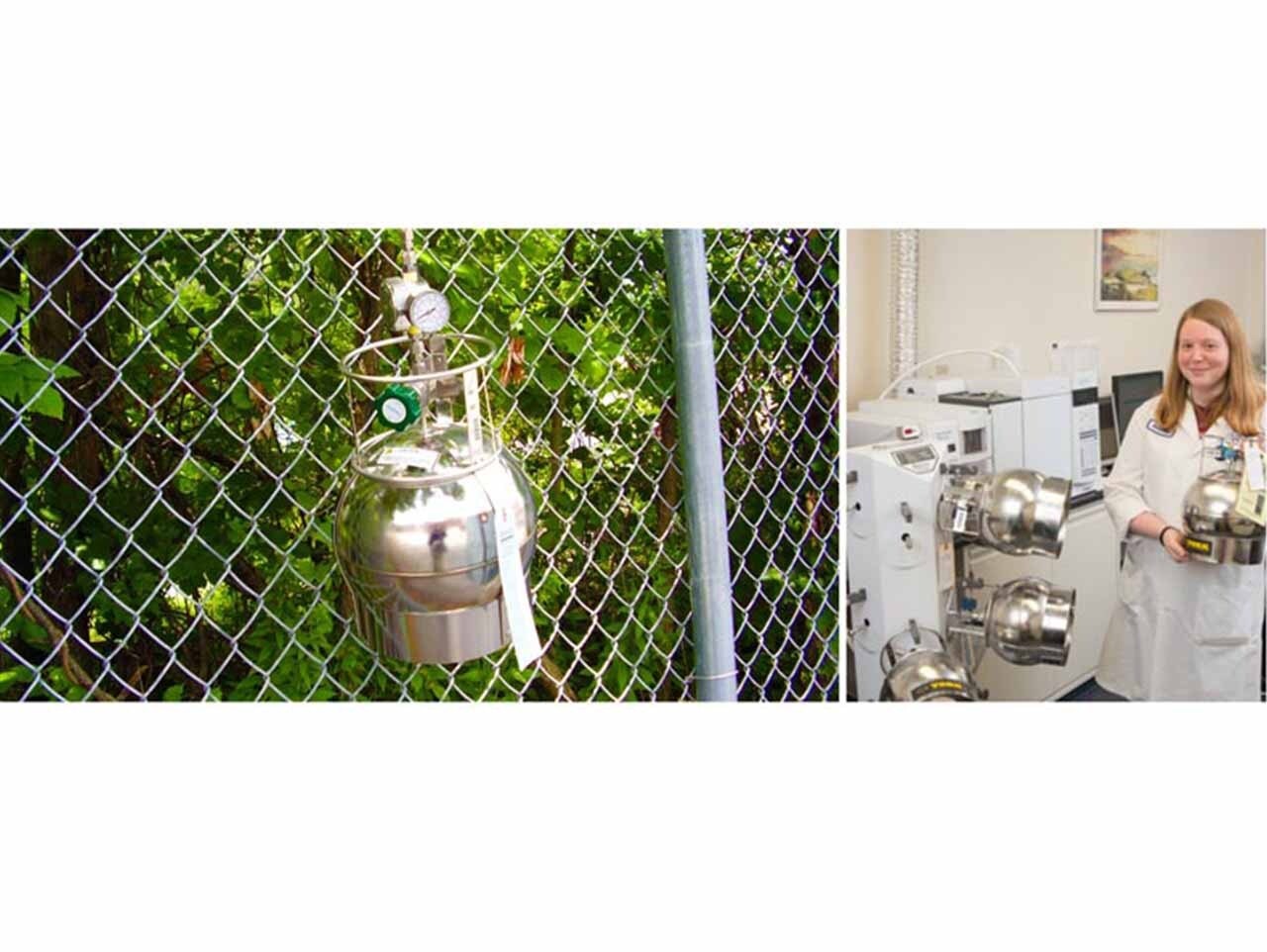
OCs collected in SUMMA® canisters are analyzed by GC/MS EPA Method TO-15
Photo Ionisation Detector (PID) instruments are typically used for continuous TVOC monitoring and fugitive emissions detection. These detectors written report in real-fourth dimension and can place trends in TVOC concentration down to ppb levels. They tin can also be integrated with particulate monitoring systems for continuous measurement at the site boundary. At the Gowanus project, for example, TRC used PID sensors integrated with PM10 monitors. Alternatively, for periodic and detached monitoring, portable TVOC monitors similar Aeroqual'southward Serial 500 with PID sensor or RAE Systems MiniRAE 3000 are useful. Portable monitors can exist used to take readings when you go far at a site, to monitor the air while opening a well cap or overturning soil – or to accept a reading before you leave a sampling site.
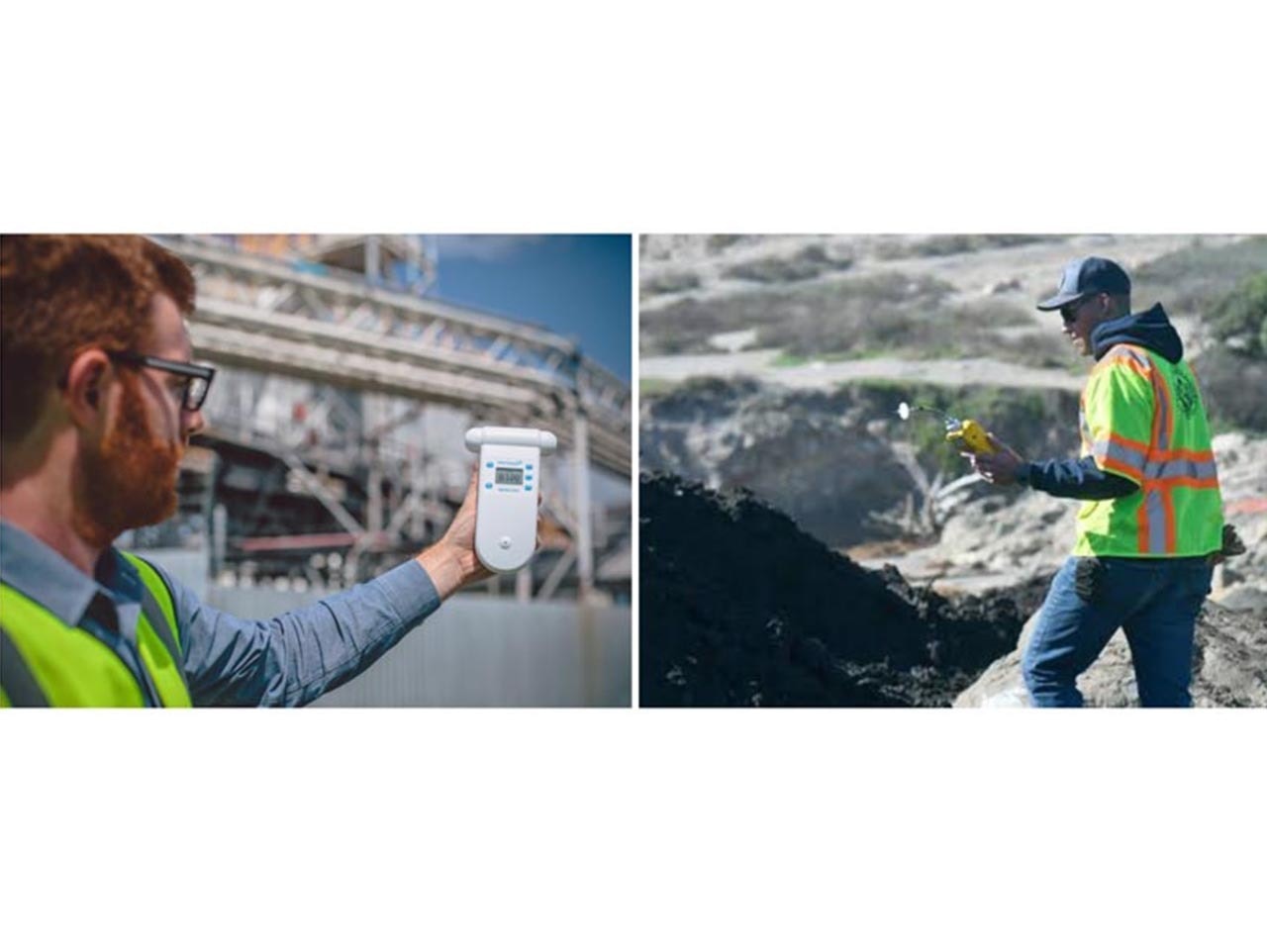
Portable PID monitors like Aeroqual Series 500 and RAE miniRAE 3000 are useful for periodic TVOC sampling
What methods tin be used for PM dust monitoring?
PM10 particulate monitoring is also performed during an investigative cess to constitute the baseline at the remediation site. Sampling equipment includes dust deposition gages, gravimetric samplers, and portable or stock-still direct-reading particulate monitors. Gravimetric particulate filters (i.e. Hello-Vol and Lo-Vol) tin can be analyzed by 10-ray fluorescence (XRF) for heavy metals (e.thousand. Lead, As, Cr etc.). SCAQMD Dominion 1466 applies PMten as a surrogate for determining maximum avoiding airborne concentrations of metals and polycyclic aromatic hydrocarbons. The monitors deployed at the Gowanus projection utilize light scattering nephelometry, an approved method for real-time PM monitoring.
The Aeroqual Dust Sentry is a real-fourth dimension dust monitor which uses a robust light-handful nephelometer with sharp cut cyclones for PM10 or PMtwo.5. It complies with MCERTS and SCAQMD Dominion 1466, Executive Officer Pre-Canonical PM10 Monitors, and can be used on DEFRA regulated projects in the UK, and sites governed past Rule 1466 in California and DER-x in New York.
Why is meteorological monitoring useful?
Regulations usually require the air quality management programme to include meteorological monitoring. Wind direction information is used to position the monitoring equipment in appropriate upwind and downwind locations. For instance, DER-x guidelines crave daily measurement of wind speed and direction, temperature, barometric force per unit area, and relative humidity to establish background conditions. All-in-1 systems like Aeroqual's AQS one Air Quality Monitor offer integrated atmospheric condition sensors and reporting convenience, as the meteorological information is bachelor aslope TVOC and PMten data on a unmarried software platform.
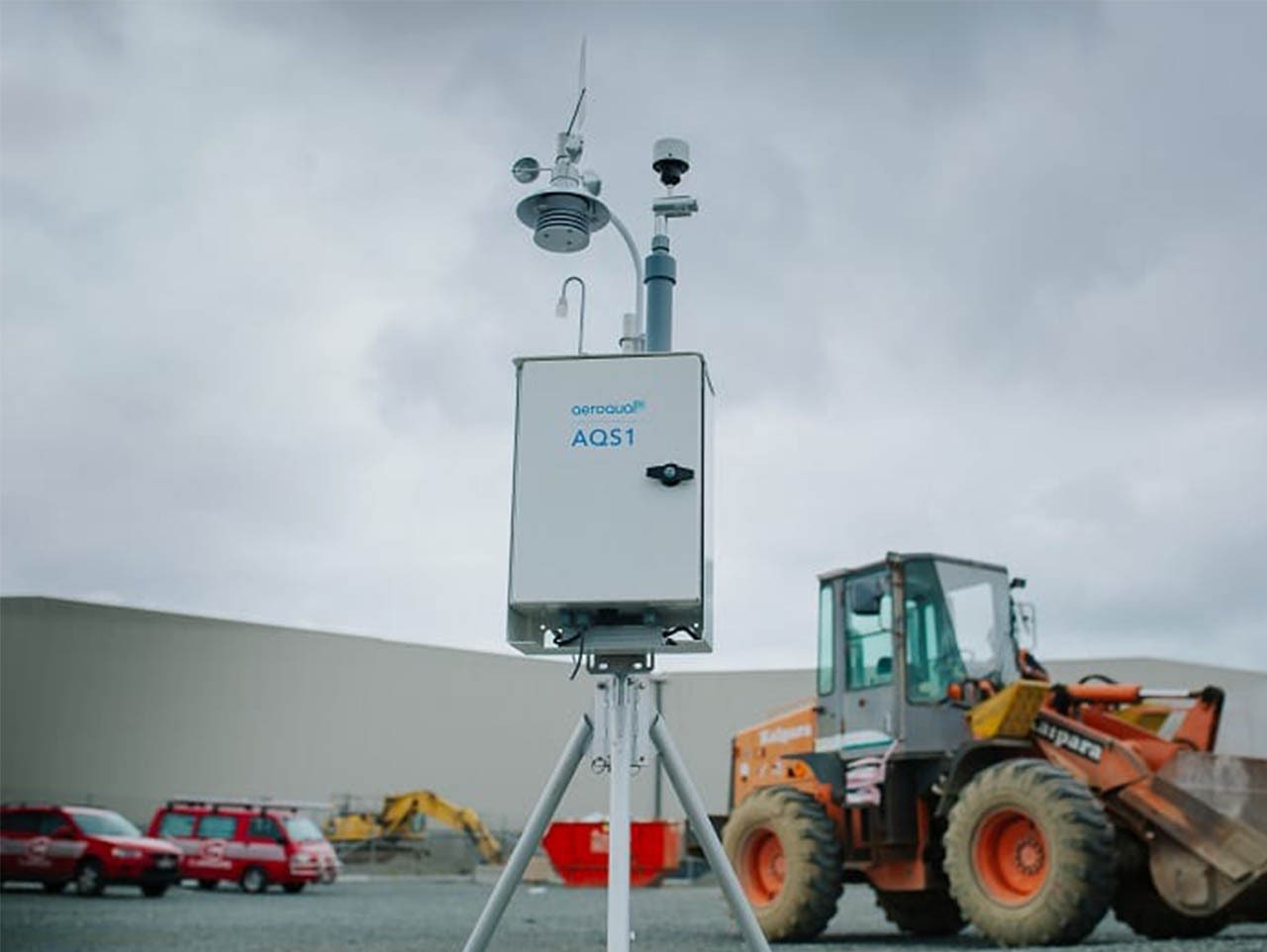
All-in-one systems like the AQS 1 Air Quality Monitor integrate PM10, TVOC and weather data with Wi-Fi and Cloud telemetry
What integrated monitoring solutions are available?
Diverse solutions combine continuous TVOC and PMten monitoring with data telemetry and alarms. The air monitors at Gowanus combine PID detectors and optical particle sensors from different manufacturers, with TRC's data logging platform. Alternatively, all-in-i solutions like the Aeroqual AQS i Air Quality Monitor are able to deliver PM10, TVOC and meteorological information, with remote data acquisition and alerts, within a single instrument. Integrated systems like this are often more than technically defensible and cost-constructive than fragmented solutions from multiple suppliers. Aeroqual's instruments are WiFi enabled and can exist networked. The monitors can as well run on external bombardment or with solar panels, where no mains ability is available on site.
When and how do you respond to high air pollution events? what response levels and actions apply?
Grit and particulate concentrations and TVOC should be monitored and recorded continuously at the downwind perimeter of the exclusion zone, or immediate piece of work area. Upwind measurements should also be taken to establish background conditions.
TVOC monitoring response and action levels are calculated over a running average and if the concentration exceeds the trigger value (i.e. DER-ten states 5 ppm), work activities must cease temporarily. If levels then drib back below the trigger value, work activities can resume. Still, if levels remain higher up the trigger value at the perimeter, piece of work activities must be close downwardly until the emission source is identified and abatement actions taken. Air monitoring continues throughout this process. All piece of work activities must be halted if TVOC levels are well above the trigger value (i.e. DER-ten states 25 ppm) at the site perimeter.
Remediation sites usually require a minimum of ii continuous particulate monitors configured to measure out PM10 levels in real-time. They must also report a running concentration average and trigger an alarm to indicate an exceedance of the action level. Piece of work activities can normally continue with grit suppression techniques, provided that downwind PM10 particulate levels do not exceed above the upwind level (i.east. DER-10 states 150μg/10003).
What suppression techniques are available?
Surface wetting by atomized water (mist) and vapor suppression foam techniques are normally applied to areas where dust and TVOC emissions may occur. These methods reduce potential airborne contaminants released during soil handling, staging and other cleanup activities. On most remediation sites water misting via h2o cannon or mobile h2o cart is usually sufficient equally a daily command to minimize the potential for fugitive emissions.
Real-life instance of a remediation projection: Gowanus Canal
'So what does air monitoring at a remediation site actually wait like?', I hear yous ask. Let's take a closer look at a existent-life example in Gowanus, Brooklyn'due south hipster neighborhood.
Gowanus, a hipster neighborhood with a serious environmental problem
During a contempo visit to the Big Apple, I spent a summer weekend in the hipster neighborhood of Gowanus, in the centre of Brooklyn. That'southward right Gowanus, the former industrial wasteland and waterway that is now brindled with artists, live shows, delicious bites and cheap beer.
Gowanus is both grubby and picturesque, with a gritty industrial history dating to the mid-1800s. Today, the neighborhood offers the promise of waterfront holding and old warehouses full of potential for revitalization. I say "promise" and "potential" because the Gowanus Canal is heavily polluted, an environmental disaster that was 135 years in the making.
The U.Southward. EPA classifies the Gowanus Culvert every bit a Superfund site and is performing trials at the fourth Street Turning Basin to determine effective methods for eventually cleaning the entire culvert by 2027.
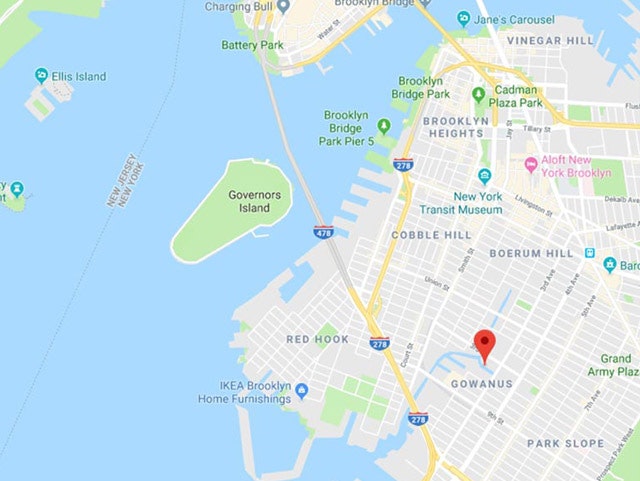
Gowanus Location Map - Source: EPA
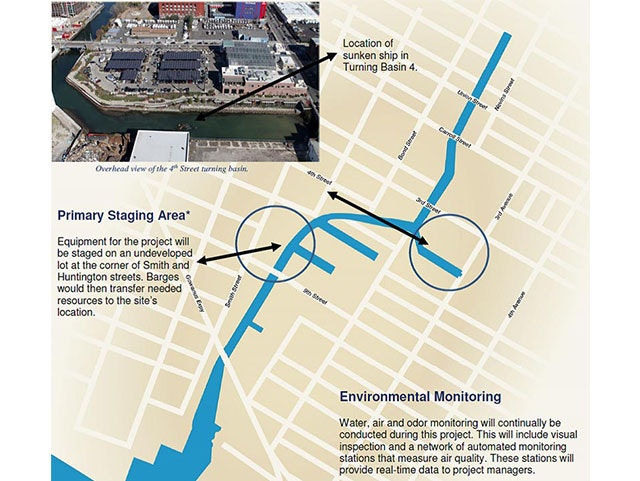
Location of Gowanus Culvert and fourth Street Turning Basin in Brooklyn, New York. - Source: EPA
Gowanus Culvert airplane pilot cleanup project
I'd bundled to meet Gary Hunt and Jon Bowser from TRC Solutions in Gowanus. TRC is a national applied science and consulting management firm overseeing the environmental aspects of the Gowanus Culvert pilot cleanup projection. Gary is VP and Principal Scientist and Jon manages Air Quality and Meteorological Monitoring. TRC currently operate six air quality stations at the 4th Street Bowl along with 2 additional stations and a meteorological tower at the staging and sludge handling 1000. TRC had fabricated the stations for the pilot project but, as they are not an instrument manufacturer, they were interested in evaluating Aeroqual'south Dust Sentry monitor range which are purpose-designed for air monitoring at remediation sites.
TRC'south set up at Gowanus is a good example of defensible air monitoring at a remediation site. Jon pointed out the stations, which are located near sensitive receptors (businesses, residences and shops) on both sides of the canal basin. He explained that the monitors collect real-fourth dimension measurements which are compiled into weekly progress reports and uploaded to the Gowanus Superfund website. In improver, if dust and toxic air contaminants from cleanup activities exceed regulations at the perimeter, the monitors automatically ship an SMS alert to the site supervisor. The supervisor can then manage an immediate response action, including abatement strategies and even temporary cessation of site works.
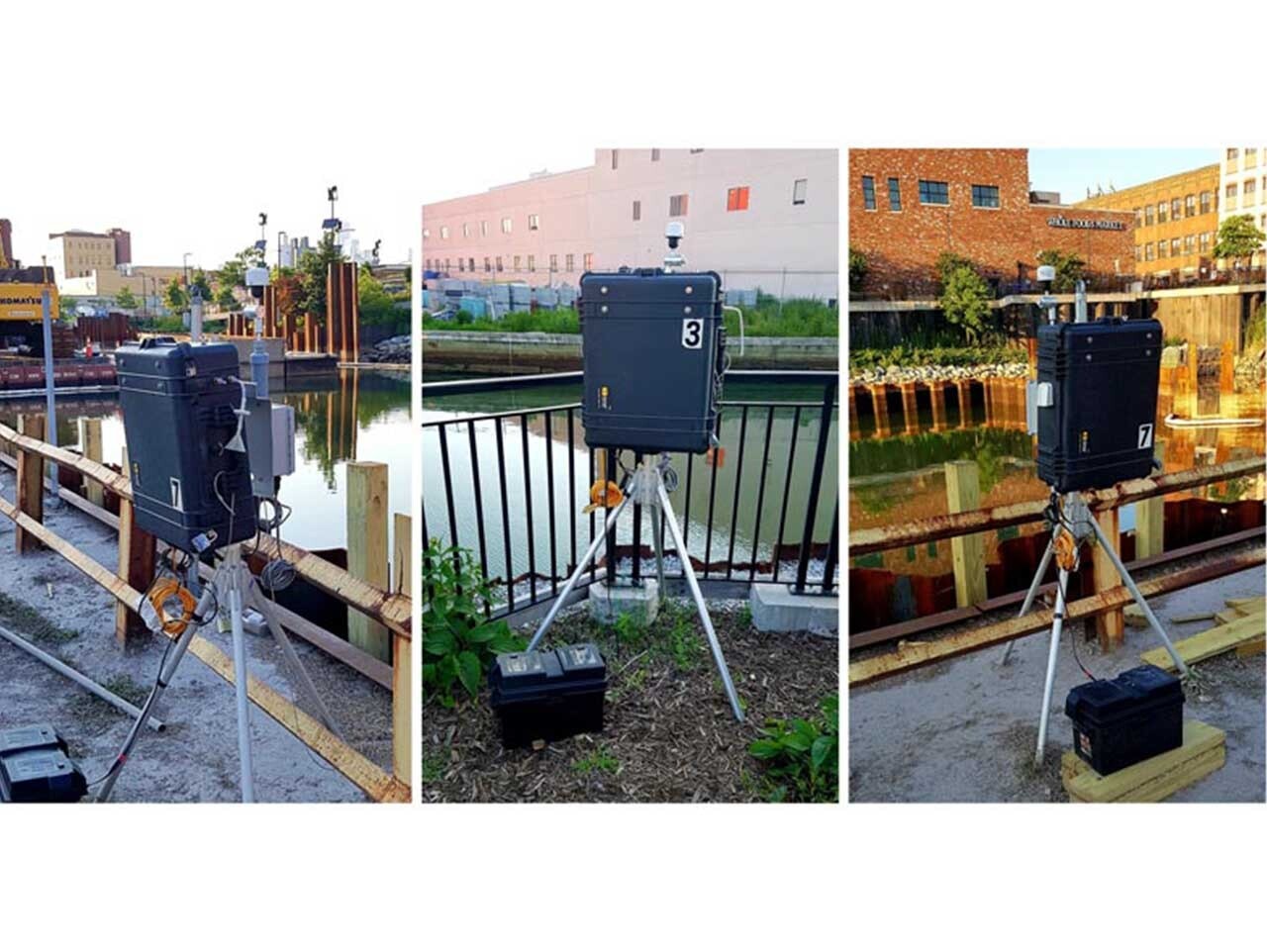
TRC operates viii air monitoring stations at the Gowanus Canal fourth Street Turning Basin and upland staging surface area.
Fundamental takeaways from the Gowanus remediation site
The Gowanus Superfund project is an instance of technically defensible air quality monitoring for remediation sites. Non all air monitoring programs run for as long as Gowanus, but whatever the duration of your project, your air monitoring plan needs to define project objectives, stakeholder needs, regulatory compliance, and address the post-obit central points:
-
Monitoring objectives
-
Perimeter monitoring site locations
-
Monitoring protocols for reporting and frequency of sampling
-
Conspicuously defined response and activity limits for diverse parameters
-
Instrumentation specification and scale
-
Routine performance, data telemetry and data reporting
Neglecting any of these fundamental bug tin can result in liabilities for the site owner and remediation contractor or hateful more elaborate and expensive monitoring programs are necessary. Aeroqual recommends engaging the services of an experienced environmental consultant, like TRC Solutions, to design and implement the air quality and grit management plan for your remediation projection.
I hope you learnt something new about air monitoring at remediation sites
My visit to Gowanus raised more than questions than answers about air monitoring at remediation sites. I only had to notice out more than – hence this blog! I hope you've enjoyed this snapshot of what I've learned from the Gowanus site in New York and from visiting similar remediation sites in Los Angeles.
What else tin can I recommend? For a toxic romance, take a walking tour of Gowanus Canal. A contradiction of picturesque tranquility and stupefying toxicity. You as well may exist surprised at what you learn.
What solutions does Aeroqual offering?
Aeroqual makes advanced sensors and equipment for air quality monitoring. We help environmental agencies and consultants make meliorate air quality decisions by providing them with cost-constructive and reliable instrumentation and information. The Dust Lookout man and AQS one Air Quality Monitors are used for air quality monitoring at remediation, landfill and industrial fenceline sites. Please contact us to tell united states more about your air monitoring requirements.

Remediation air monitoring solutions
Larn More

Construction dust monitoring solutions
Learn More
Useful Links
Source: https://www.aeroqual.com/blog/air-monitoring-at-remediation-sites
0 Response to "Background Readings of Air Monitoring Stations at Construction"
Post a Comment